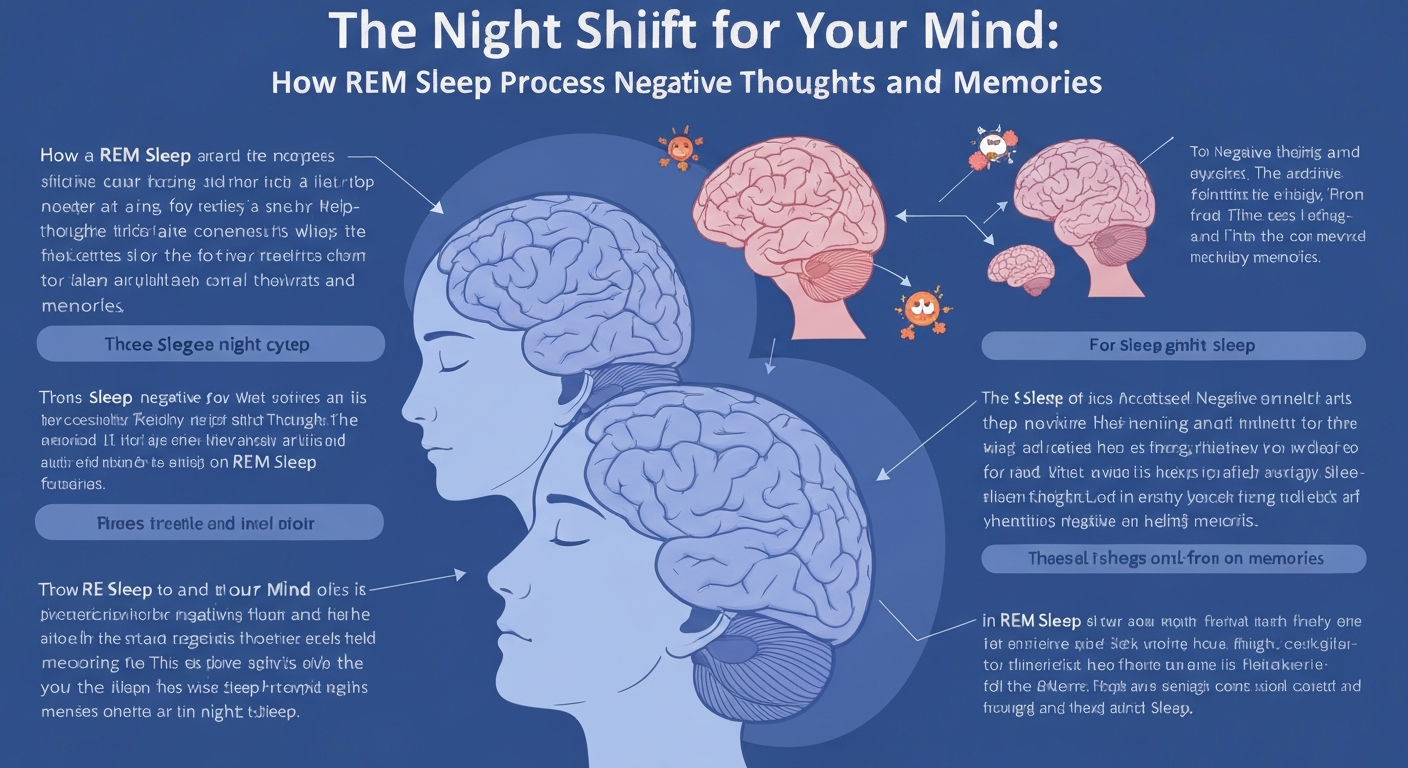
Ever woken up after a stressful day feeling a little lighter, as if the weight of your worries had somehow diminished overnight? Or perhaps you've noticed that a particularly upsetting event seems less raw and intense a few days later? While we often attribute this to the passage of time, there's a powerful, often overlooked, process happening every night: your brain's emotional detoxification during sleep, particularly during Rapid Eye Movement (REM) sleep.
We all encounter negative thoughts, stressful situations, and challenging memories. It's an unavoidable part of life. But how our brains process and integrate these experiences profoundly impacts our mental well-being. Far from being a passive state, sleep – and specifically REM sleep – plays a crucial, active role in helping us emotionally regulate, learn from, and ultimately cope with the darker facets of our daily lives. Let's delve into the fascinating world of REM sleep and uncover how it acts as a nightly therapist for our minds.
What Exactly is REM Sleep?
Before we dive into its therapeutic benefits, let's quickly define REM sleep. Sleep isn't just one uniform state; it cycles through several stages. We begin with non-REM sleep (NREM), which includes light sleep and deep sleep. After about 90 minutes, we enter the first period of REM sleep. This stage is characterized by rapid eye movements (hence the name), increased brain activity similar to wakefulness, temporary muscle paralysis (to prevent us from acting out our dreams), and vivid dreaming.
As the night progresses, REM sleep periods become longer, with the longest stretches occurring in the latter half of your sleep cycle. It's a critical stage for various cognitive functions, including memory consolidation and, as we'll explore, emotional processing.
The Brain's Emotional Hub During REM
During REM sleep, specific areas of the brain show heightened activity. Two key players in emotional processing are the amygdala and the prefrontal cortex. The amygdala is often referred to as our brain's emotional alarm system, particularly involved in fear and stress responses. The prefrontal cortex, on the other hand, is responsible for higher-level thinking, decision-making, and emotional regulation.
What's particularly interesting during REM sleep is the unique neurochemical environment. Levels of norepinephrine (also known as noradrenaline), a neurotransmitter associated with stress, vigilance, and the 'fight-or-flight' response, are significantly reduced or even shut off during REM. This reduction is believed to be crucial for emotional processing.
Detoxifying Memories: How REM Reduces Emotional Intensity
Imagine your brain as a busy office. During the day, it's collecting information, experiencing emotions, and forming memories. When you go to sleep, especially during REM, it's like the night shift begins, where the brain starts to file, organize, and clean up the day's events. For negative memories, this 'cleanup' process is vital.
With reduced norepinephrine, the brain can revisit upsetting memories and experiences without the accompanying surge of stress hormones that were present during the initial event. It's like replaying a stressful movie scene, but with the sound turned down and the emotional impact muted. This allows the prefrontal cortex to work its magic, integrating the memory into your long-term storage in a less emotionally charged way.
Research suggests that this process helps to strip away the raw emotional intensity from a memory, transforming a vivid, distressing experience into a more factual, narrative memory. You still remember what happened, but it no longer triggers the same overwhelming feelings of fear, anxiety, or sadness. This is why a trauma therapist might sometimes recommend getting adequate sleep after a distressing event – it's not about forgetting, but about processing without being re-traumatized by the memory each time it surfaces.
The Impact on Mental Health and Emotional Resilience
The implications of this emotional processing in REM sleep are profound for our overall mental health. Chronic sleep deprivation, particularly a lack of REM sleep, has been linked to increased anxiety, depression, and even conditions like Post-Traumatic Stress Disorder (PTSD). Without sufficient REM sleep, our brains struggle to effectively 'detoxify' negative emotions and memories, leaving us more vulnerable to stress, emotional dysregulation, and persistent rumination.
On the flip side, prioritizing and achieving adequate, high-quality REM sleep can significantly boost our emotional resilience. It allows us to process daily stressors, integrate difficult experiences, and maintain a more balanced emotional state. Essentially, REM sleep helps us learn from our experiences without being perpetually weighed down by their emotional burden.
Practical Steps to Boost Your REM Sleep
So, how can you ensure your brain gets the therapeutic REM sleep it needs? Here are a few tips:
Prioritize Sleep: Aim for 7-9 hours of sleep per night. REM cycles lengthen towards the end of your sleep, so cutting sleep short means less REM.
Maintain a Consistent Sleep Schedule: Go to bed and wake up at roughly the same time every day, even on weekends. This helps regulate your body's natural sleep-wake cycle.
Create a Relaxing Bedtime Routine: Wind down with activities like reading, a warm bath, or gentle stretching before bed. Avoid screens and stimulating activities.
Optimize Your Sleep Environment: Ensure your bedroom is dark, quiet, and cool.
Limit Alcohol and Caffeine: While alcohol might make you feel sleepy, it can disrupt REM sleep later in the night. Caffeine too close to bedtime can make it harder to fall and stay asleep.
Embrace the Power of Sleep
Our understanding of sleep continues to evolve, but the evidence is clear: sleep is not merely a period of inactivity. It's a dynamic and essential process for both our physical and mental health. The remarkable ability of REM sleep to help us process and neutralize negative thoughts and memories highlights its role as a nightly therapeutic session for our minds.
So, the next time you lay your head down, remember that you're not just resting; you're actively engaging in a vital process that strengthens your emotional resilience and helps you navigate the complexities of life with greater calm and clarity. Prioritize your sleep, and give your brain the night shift it needs to keep you emotionally healthy and robust.